The key sectors of the Gabonese economy
Six sectors, their figures and the state of their transformation.
Six sectors, six trajectories
From mature industry to the markets public policy has just opened.
Transformation locale
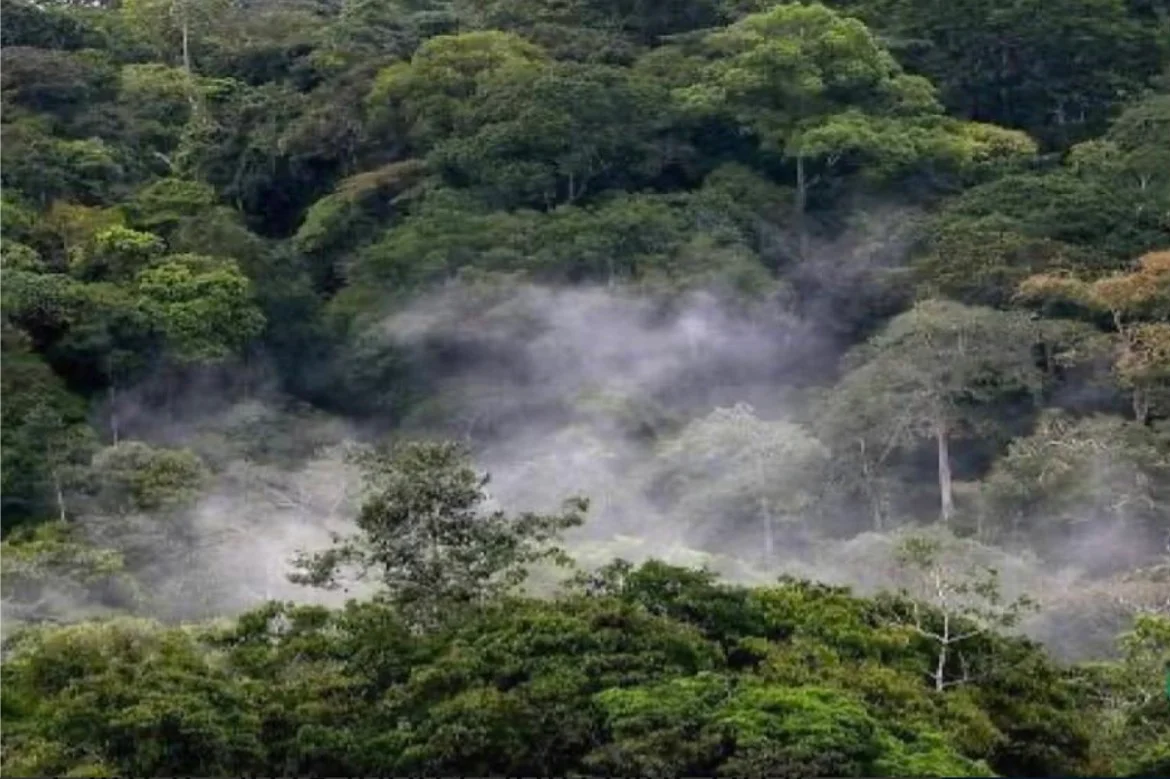
The ban on exporting logs in 2010, followed by the creation of the Nkok zone, tipped the sector towards processing on national soil. The country has become Africa's leading exporter of veneer.
- 22 M haof forest
- 84timber companies at Nkok
Manganese, iron and gold
The world's second producer of manganese, mined at Moanda. National reserves of around 150 million tonnes place the country second worldwide behind South Africa. Belinga iron ore and gold complete the portfolio.
- 2ᵉworld manganese producer
- ≈ 150 Mtof reserves
Palm, rubber and food crops
Certified sustainable palm oil, rubber and food crops. The stated goal is food sovereignty: replacing costly imports with local production.
Oil and gas
The leading source of public revenue, with output of around 200,000 barrels per day. The fields are maturing, which pushes the sector downstream and towards new operators.
- ≈ 200 000barils par jour
Renewables and the grid
Hydroelectricity, solar power and extension of the national grid. This is the sector where the need for foreign engineering is most direct.
Forest and sea as assets
Sovereign carbon credits from the REDD+ mechanism, and continental Africa's first debt-for-nature swap: a 500 million dollar blue bond maturing in 2038, of which 5 million a year funds marine conservation.
- 500 M$d'obligations bleues
- 5 M$/anfor marine conservation
On the ground
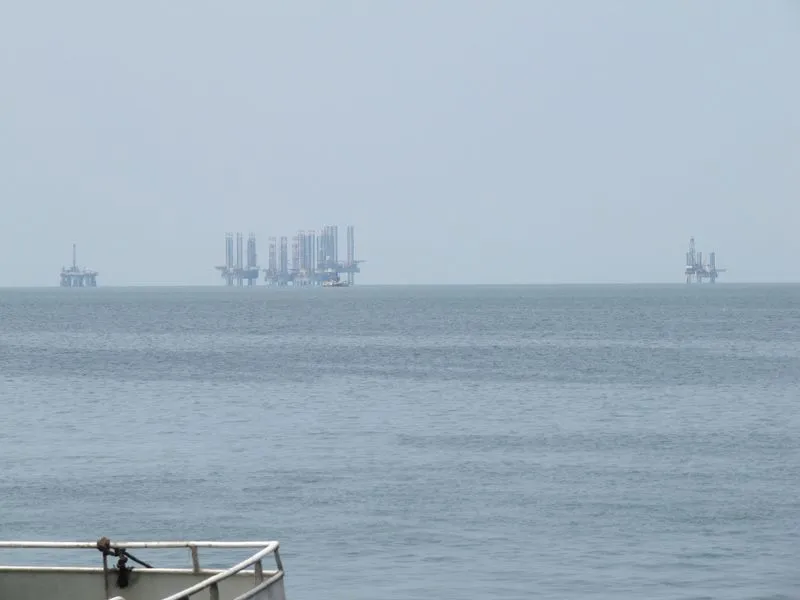
Port-Gentil
The economic capital and the historic heart of the oil industry.
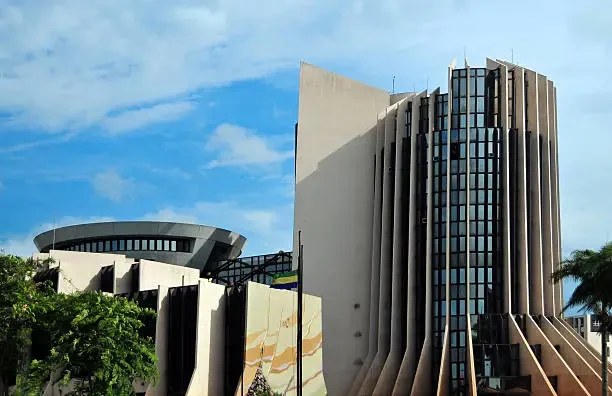
Libreville, quartier d'affaires
Head offices and economic administrations.
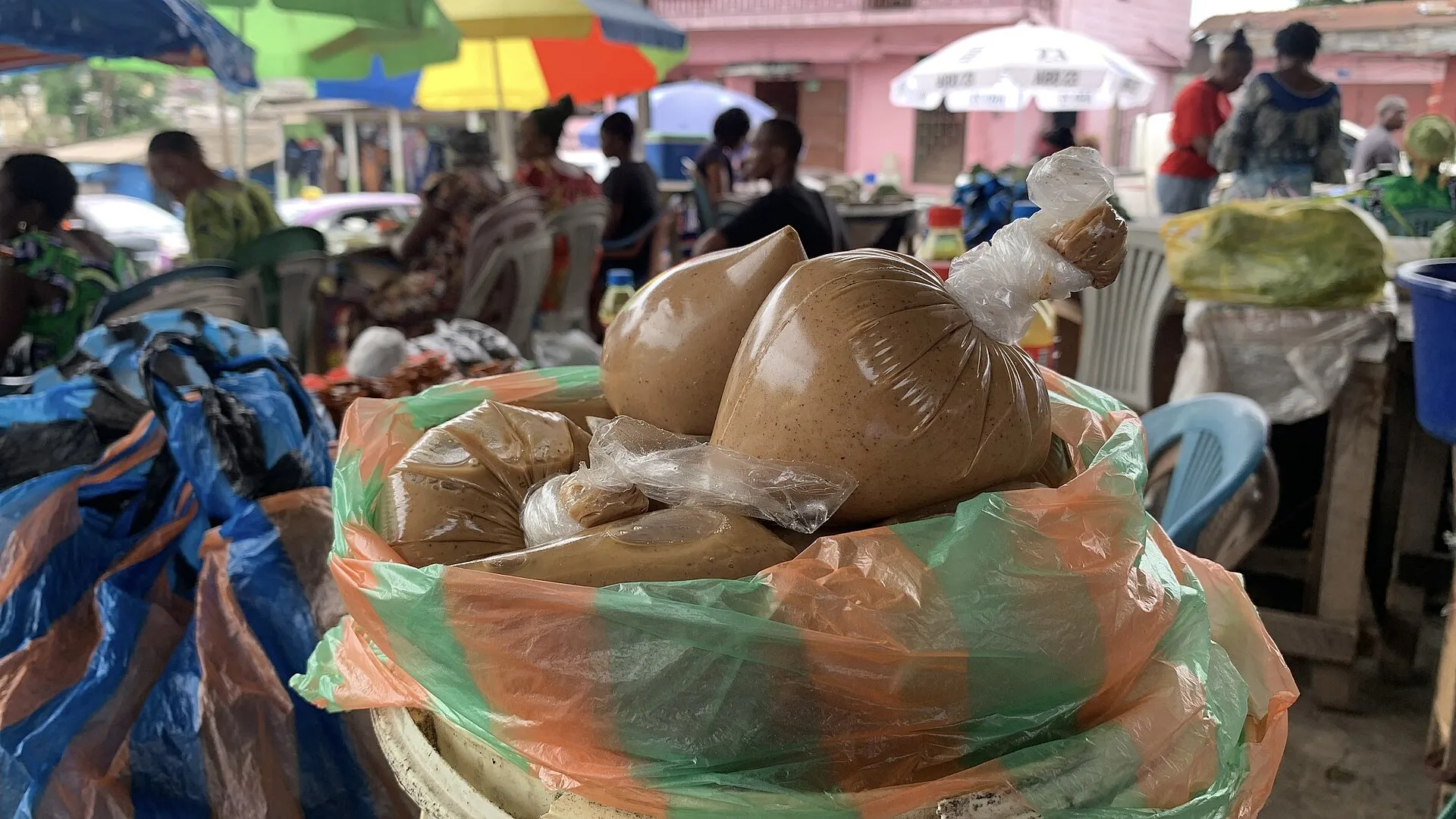
Markets and food crop sectors
Food sovereignty, a public priority and an open market.
Aller plus loin
The quantified indicators of the Gabonese economy, with their years and their sources.