Treize parcs, un seul pays
From the mangroves of Libreville to the savannahs of Haut-Ogooué, Gabon has placed nearly 11% of its territory under protection. Here are the thirteen.
See the thirteen parksThree experiences found only here
If you were to keep only three reasons to come.
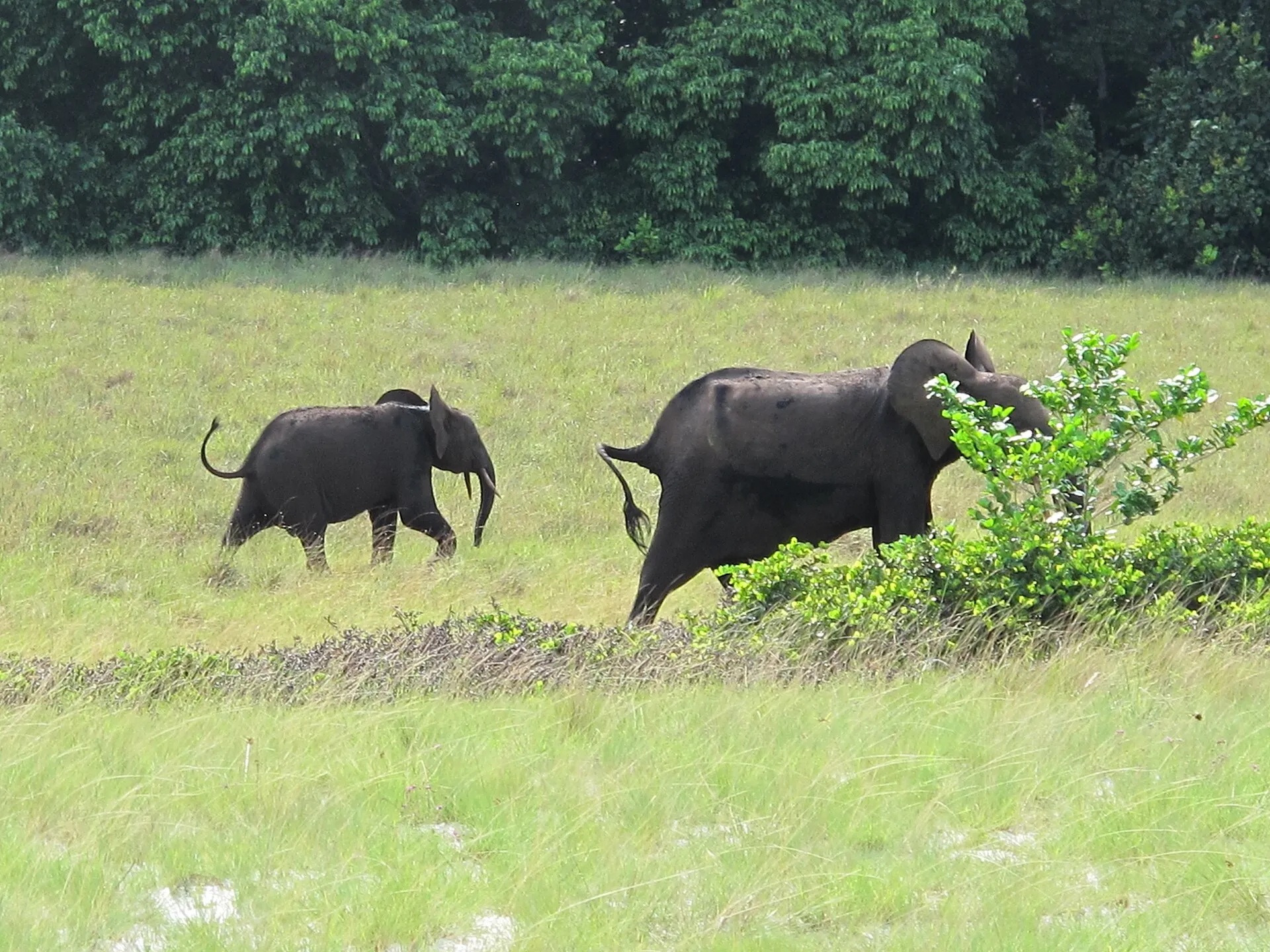
The elephant and the ocean
At Loango, forest elephants come out onto the beach and hippopotamuses cross the surf. Nowhere else does big wildlife meet the Atlantic in this way.
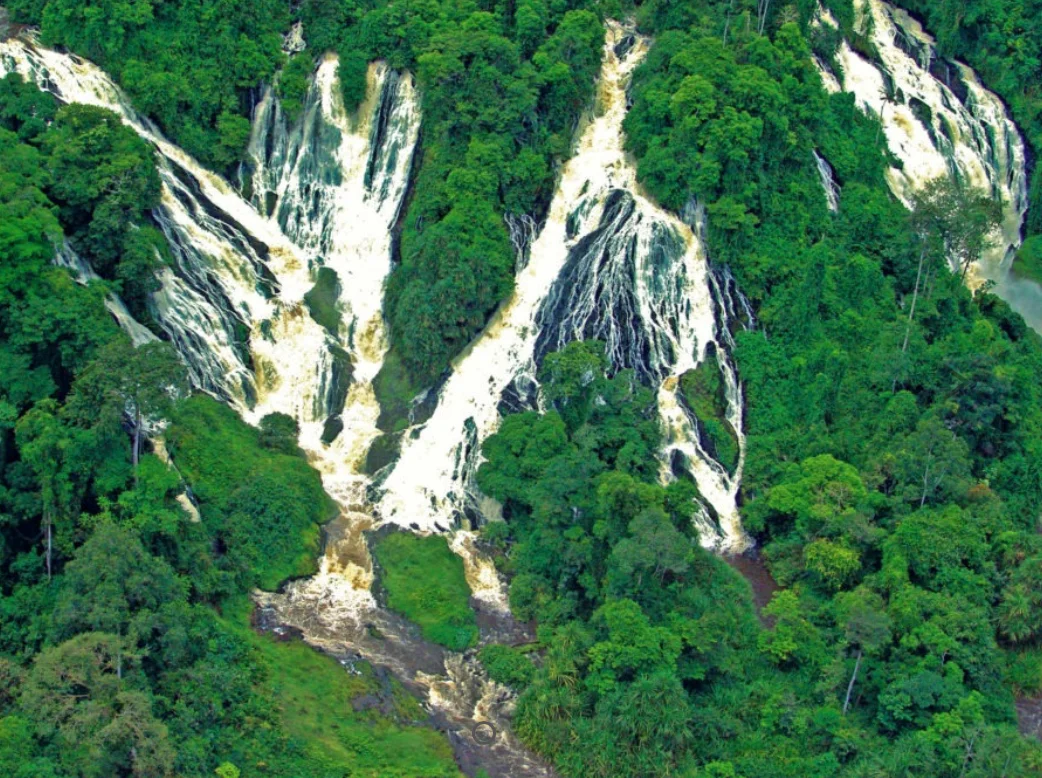
The Kongou falls
At Ivindo, inscribed by UNESCO in 2021, the Ogooué and its tributaries break into cataracts in the middle of the forest. Upstream, the Langoué clearing gathers the country's highest concentration of gorillas.
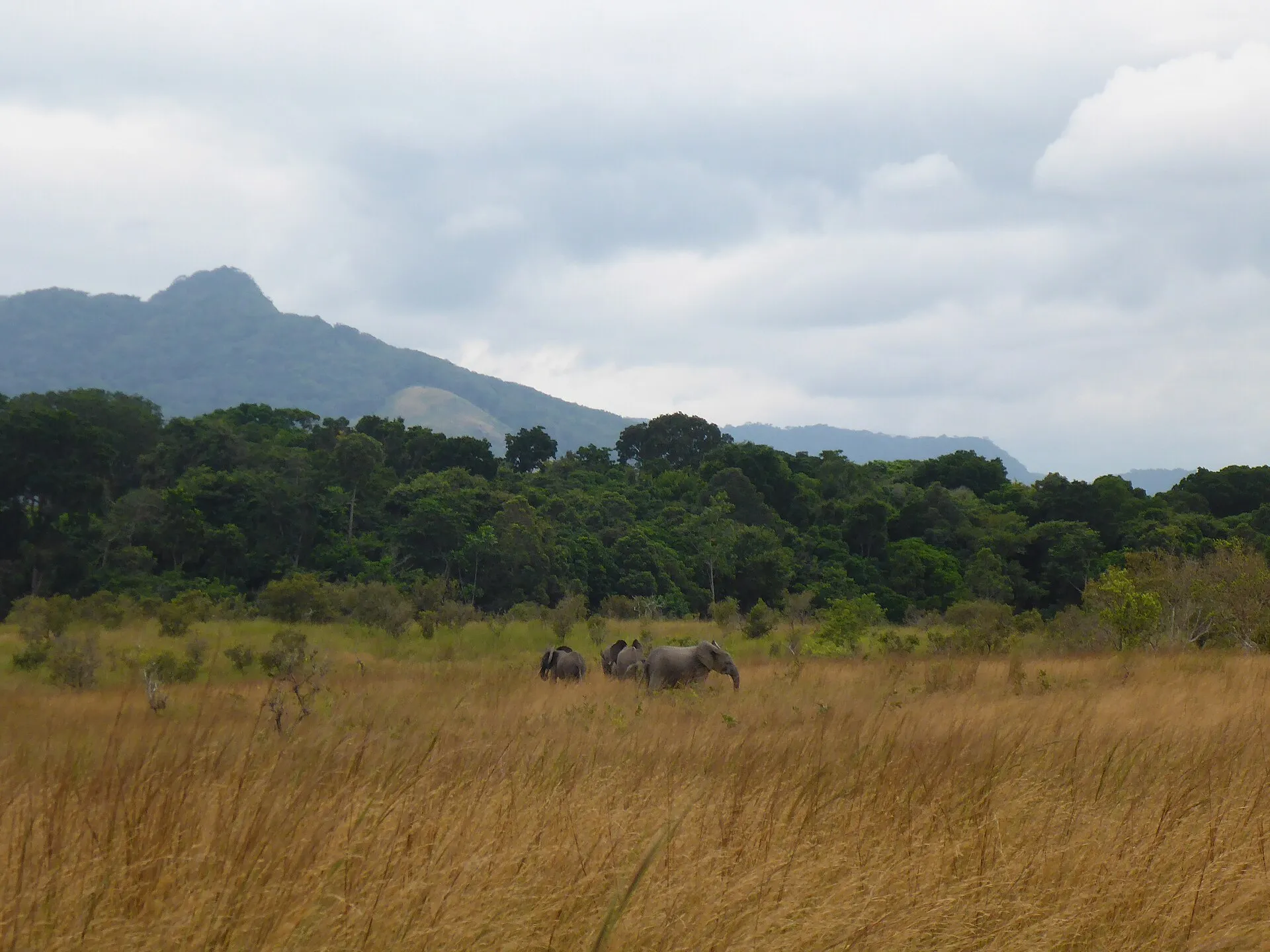
Savannah, forest and mandrills
At the Lopé, the forest opens onto the savannah. Hordes of several hundred mandrills cross the mosaic — a sight few places in the world can offer.
The thirteen parks
Grouped by landscape type, from the coast to the mountain massifs.
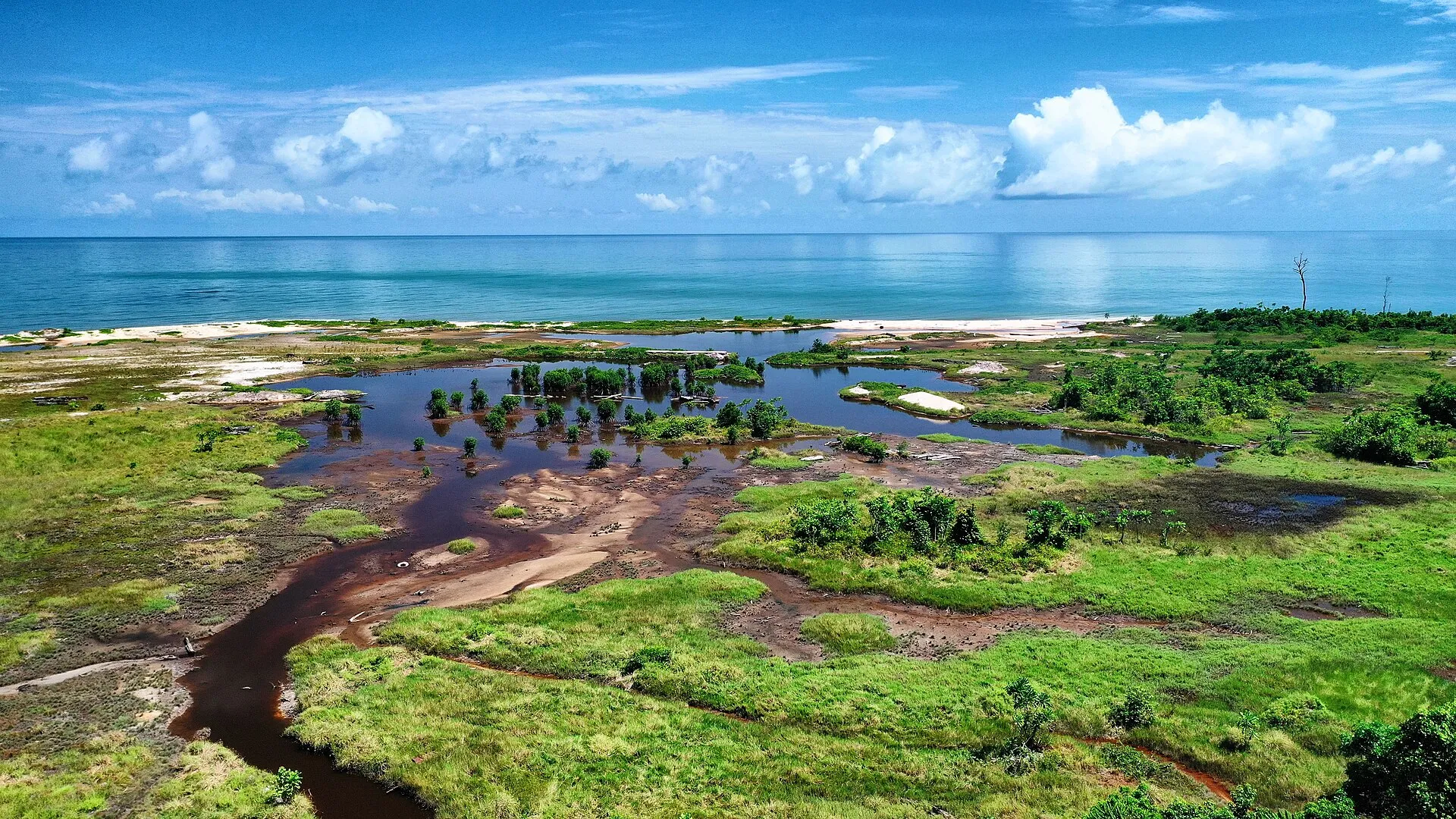
Ocean, beaches and mangroves
Four parks on the Atlantic, where the forest comes down to the sand.
Loango
Elephants on the beachThe park that made Gabon's reputation. Forest elephants and buffalo come out onto the sand, hippopotamuses bathe in the surf, and lagoons, mangroves and savannahs follow one another within a few kilometres. It is also one of the rare places in the world where a habituated group of western lowland gorillas can be approached.
Mayumba
Tortues luthA narrow strip of sand at the far south of the country. Its beaches host the largest nesting population of leatherback turtles on the African continent: close to 30,000 turtles come to lay there between October and April. Dolphins and humpback whales pass offshore.
Pongara
Nesting beachesTwenty kilometres from Libreville, on the far side of the bay. Mangroves, grassy savannahs and coastal forest; its beaches are a major nesting site for sea turtles. A Ramsar site since 2007 — the most easily reached park in the country.
Akanda
Oiseaux migrateursA maze of mangroves and mudflats at the gates of Libreville. A Ramsar site since 2007, it is Gabon's most important site for migratory birds; sea turtles also frequent its waters.
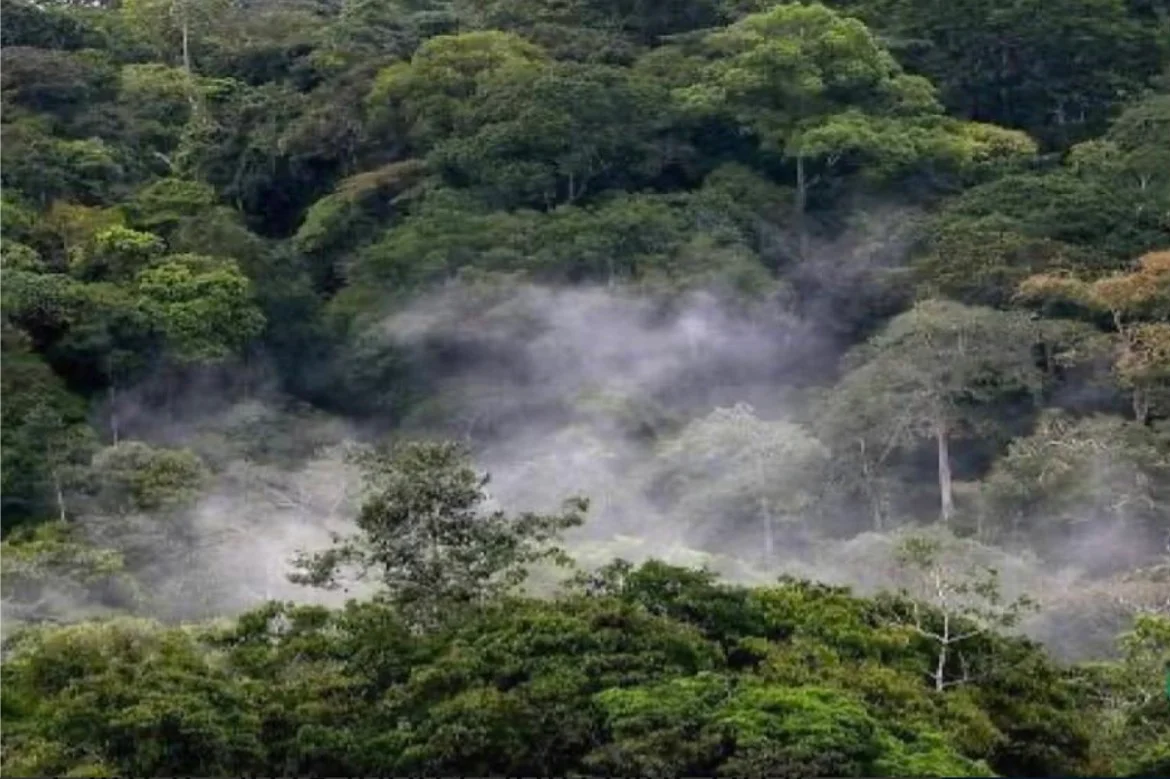
Deep forest and rivers
The heart of the planet's second-largest forest massif, after the Amazon.
Ivindo
Kongou FallsInscribed on the UNESCO World Heritage List in 2021. The Kongou and Mingouli falls are among the most spectacular in Central Africa. The park also holds the Langoué clearing, one of the continent's five great forest clearings, where Gabon's highest concentration of gorillas gathers.
Minkébé
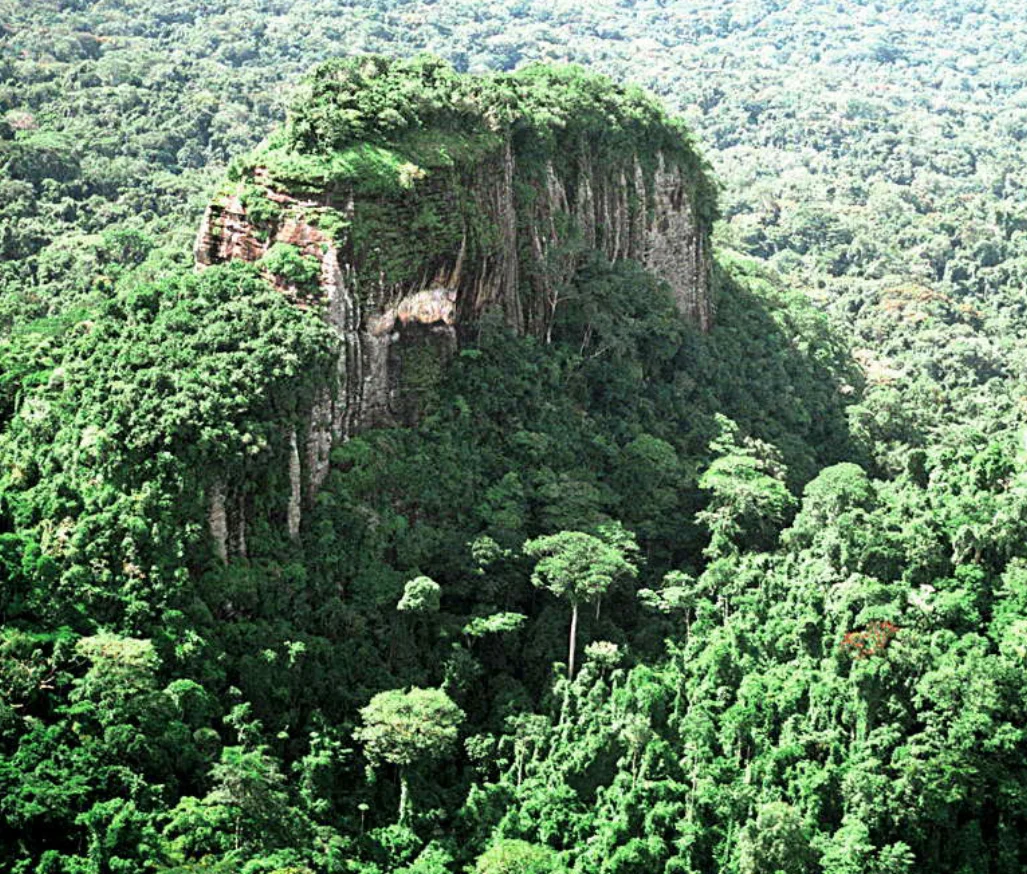
Forest elephantsThe country's largest park and one of the most intact forest blocks in Central Africa. Granite inselbergs rise from an ocean of trees. A major refuge for the forest elephant and the great apes, very little travelled by people.
Mwagna
Forest clearingsIn the east, deep in the Congo Basin. Its marshy clearings draw forest elephants, red river hogs and bongos. A deep-forest park, still largely unexplored.

Mosaics of forest and savannah
Where the tree gives way to grass, wildlife becomes visible.
Lopé
Hordes of mandrillsA mixed World Heritage property since 2007, recognised for its nature and its culture alike. Its mosaic of forest and savannah is unique, and some of the largest mandrill hordes in the world can be seen there. The site also bears some 1,800 rock engravings.
Moukalaba-Doudou
GorillesOne of the country's most promising sites for gorilla viewing: the density of gorillas and chimpanzees is among the highest in Gabon. The Doudou massif raises its relief between forest and savannah.
Batéké Plateaux
The return of the lionRolling savannahs crossed by gallery forests along the Mpassa — a landscape one does not expect in Gabon. Mandrills have been reintroduced there; a lion was photographed in 2015, then a spotted hyena in 2017, the first in decades.
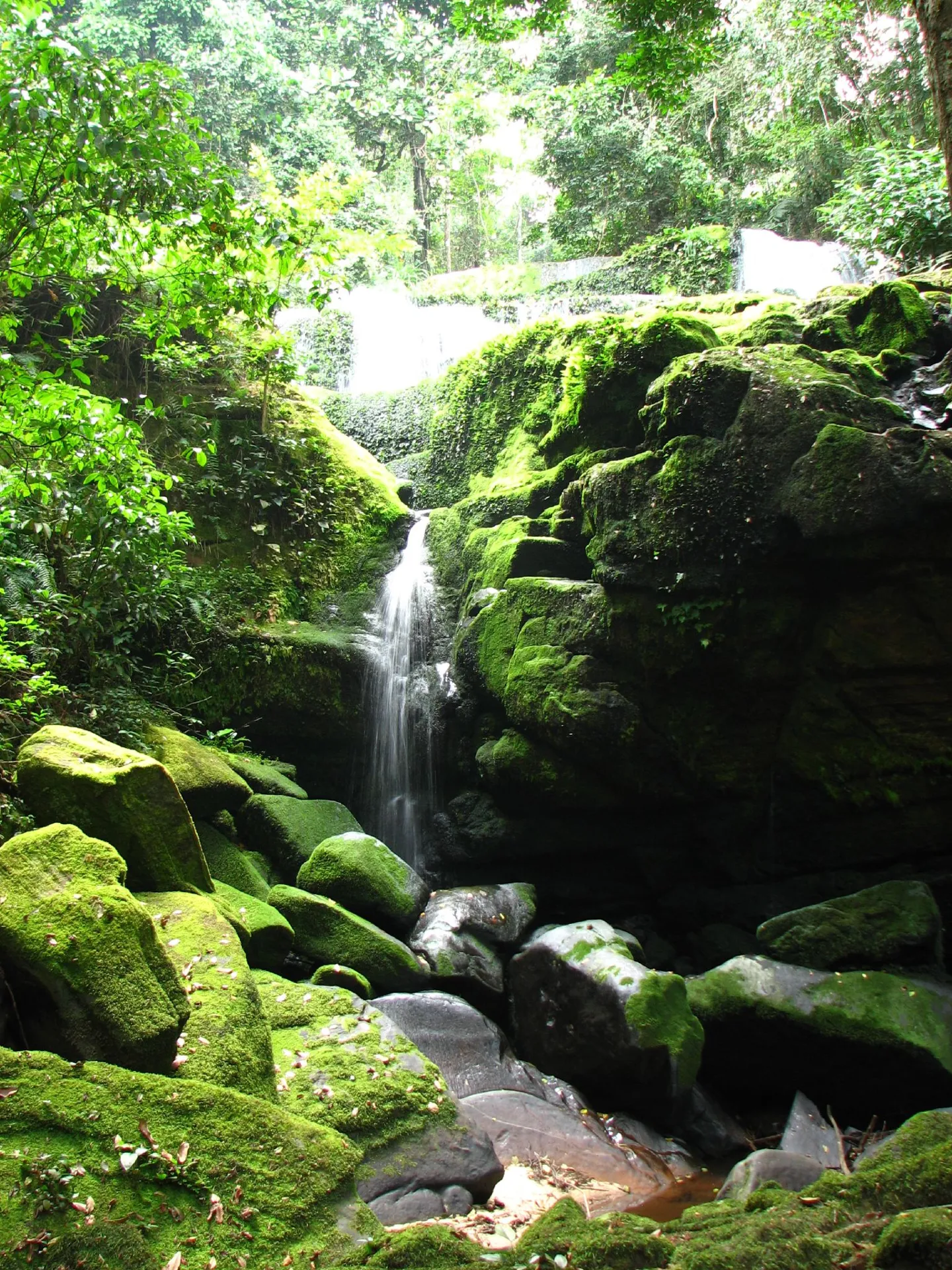
Mountains and massifs
The relief, the cloud forest and the species found nowhere else.
Monts de Cristal
Orchids and begoniasRidges drowned in cloud forest, and one of the richest areas for plant species in the whole of Central Africa. Plants new to science are still being described there today.
Waka
The Ikobé riftAt the heart of the Chaillu massif, a dense forest cut through by the Ikobé-Ikoï-Onoï rift. One of the wildest parks in the country, for experienced walkers only.
Birougou
Sun-tailed monkeyThe Birougou mountains carry some of the densest forest in Gabon. It is one of only two parks where the sun-tailed monkey lives, a species described only in 1988. Waterfalls, rapids and caves punctuate the massif.
Planning your safari
The right season
The long dry season, from June to September, is the best window for wildlife: the vegetation thins out and the tracks stay passable. For the leatherback turtles of Mayumba, aim for October to April.
Permits
Access to the parks is overseen by the National Agency for National Parks (ANPN). Enquire about permits and go through an approved operator before you leave.
Getting there
Pongara and Akanda are reached from Libreville in under an hour. For the Lopé, the Transgabonais railway serves the park. The interior parks require a domestic flight and then a track.
Votre voyage commence par un e-Visa
Entry authorisation is applied for online, before departure.