Culture and heritage
Some fifty peoples, some forty languages, two UNESCO heritage inscriptions — and masks that changed the history of European art.
Faces that changed European art
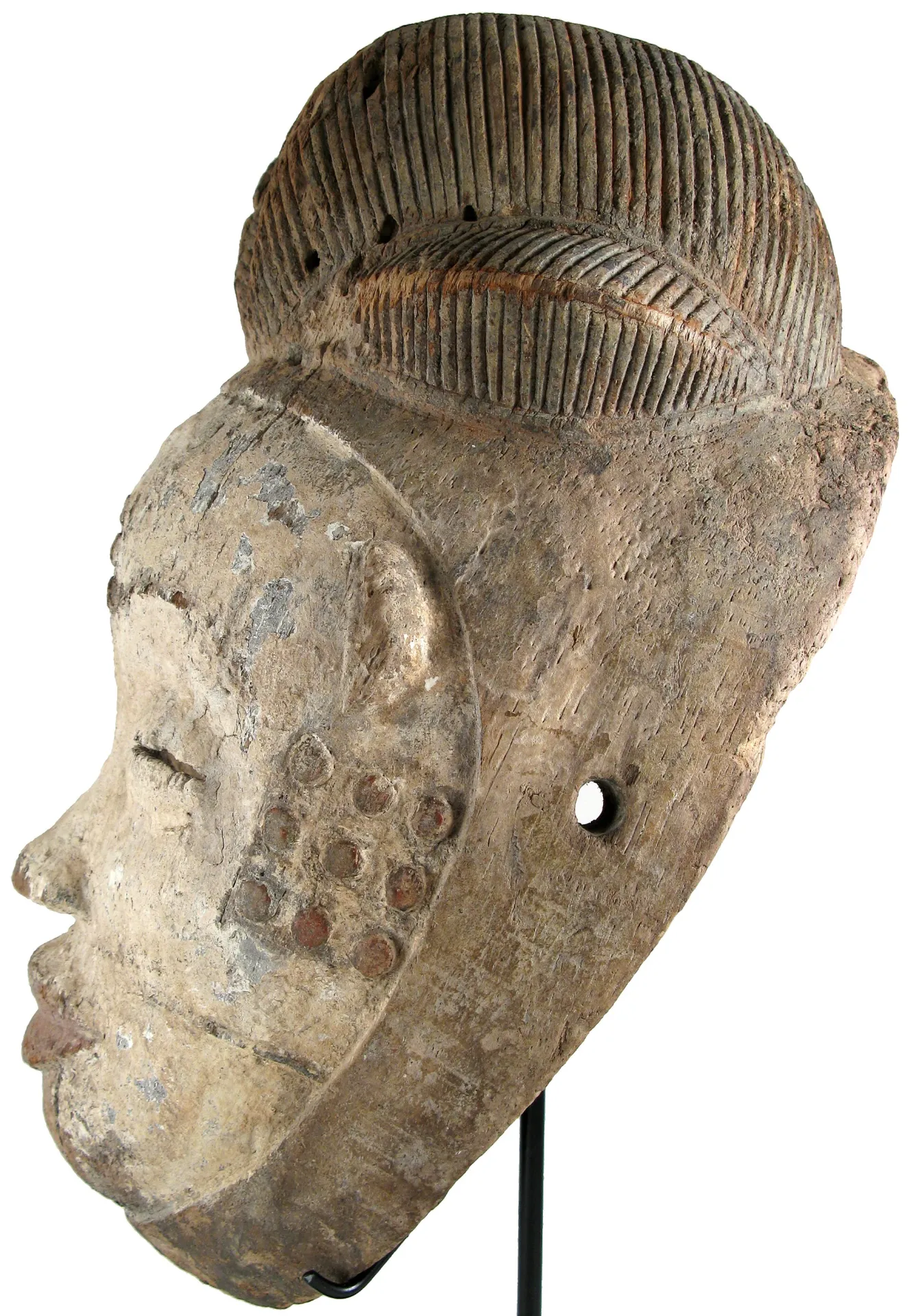
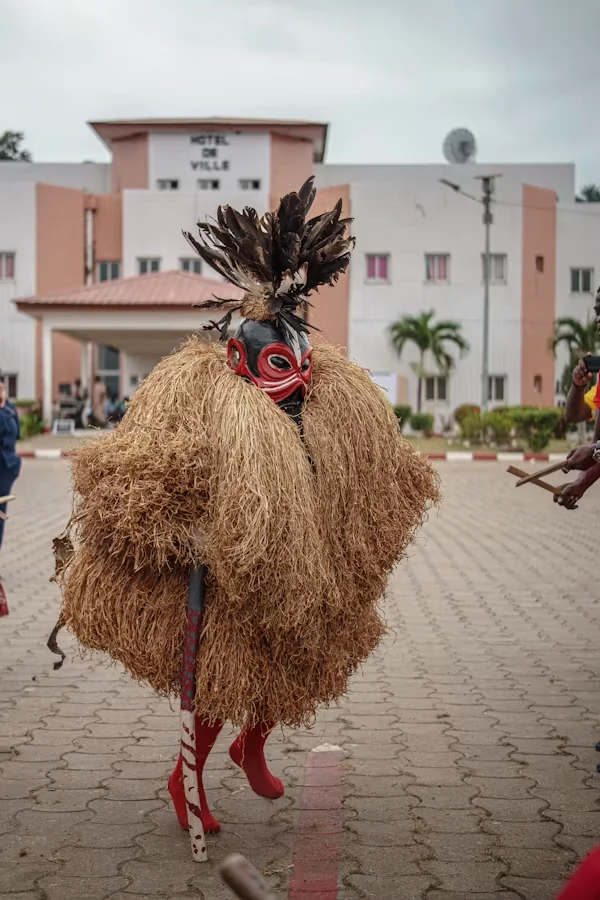
Gabon is known worldwide for its masks and its statuary. The Punu white masks and the Fang and Kota reliquary figures profoundly inspired European modern art in the early twentieth century.
Each people has its own, and each carries a name, a rite and a precise social function: the mask is not an ornament, it is an institution.
Three families of masks
The white okuyi mask
A female face of absolute serenity, heightened with kaolin, with lowered eyelids and hair dressed in tiered shells. The dancer performs it on stilts: the spirit returns among the living and stands above them.
Byeri statuary
The reliquary figures watch over the boxes holding the ancestors' bones. A face of calm on the sturdy body of a child: the serenity of the dead and the strength of the living, brought together in a single spare form.
The bwété reliquary
A figure sheathed in copper and brass strips, guardian of the bones. Its geometry profoundly inspired the European avant-gardes of the early twentieth century.
The Bwiti, pillar of spiritual identity
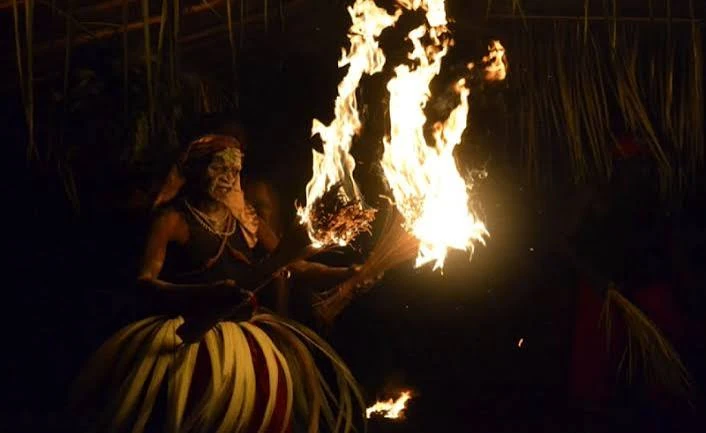
An initiation rite transmitted notably by the Mitsogo and the Fang, the Bwiti brings together songs, dances and knowledge centred on iboga. It remains a pillar of Gabonese spiritual identity.
It does not stand alone: the country has men's initiation societies — Ngil, Mwiri, Ndjobi, So — and women's societies — Ndjembè, Elombo, Lissimbou, Ivanga — which teach, judge and heal, each with its own songs and prohibitions.
Music and dance
From forest instruments to international stages.
The ngombi harp
The harp of the Bwiti, often carved with a female face: the instrument is regarded as a person, not as an object.
The mvet
A stick zither-harp mounted on calabashes, and above all an epic: the mbom-mvet sings through entire nights the cycle of the Ekang. Its art is inscribed on the intangible heritage of humanity.
Akendengué, N'Goma, Batchiellilys
Pierre Akendengué blended poetry with a pan-African horizon; Oliver N'Goma carried Gabonese zouk-soul far beyond the country's borders; Annie-Flore Batchiellilys brings the traditional repertoire and new creation into dialogue.
Inscribed on the heritage of humanity
Two UNESCO recognitions, one intangible, the other mixed.
The Mvet Oyeng
The musical art of the Mvet, its practices and the know-how associated with the Ekang community are inscribed on the Representative List of the Intangible Cultural Heritage of Humanity.
Ecosystem and Relict Cultural Landscape of Lopé-Okanda
One of the world's rare "mixed" properties, recognised for its nature and its culture alike. The site bears witness to more than 400,000 years of human occupation and carries some 1,800 rock engravings.
Languages and the table
What is spoken and what is eaten.
Where to see it
The National Museum
In Libreville, the National Museum of Arts, Rites and Traditions of Gabon holds some 2,500 objects from the everyday and ceremonial life of the country's peoples.
The Tournament of the Nine Provinces
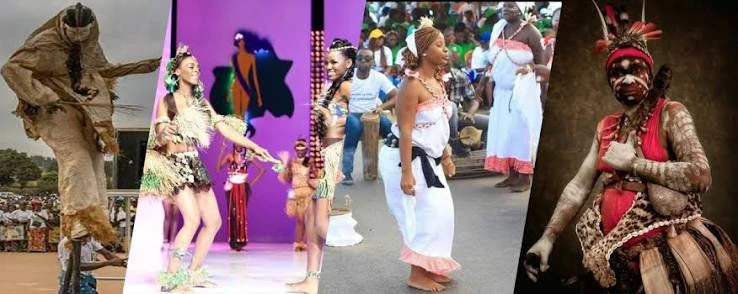
Every August in Libreville, the nine provinces set their traditional songs and dances against one another.
Lopé
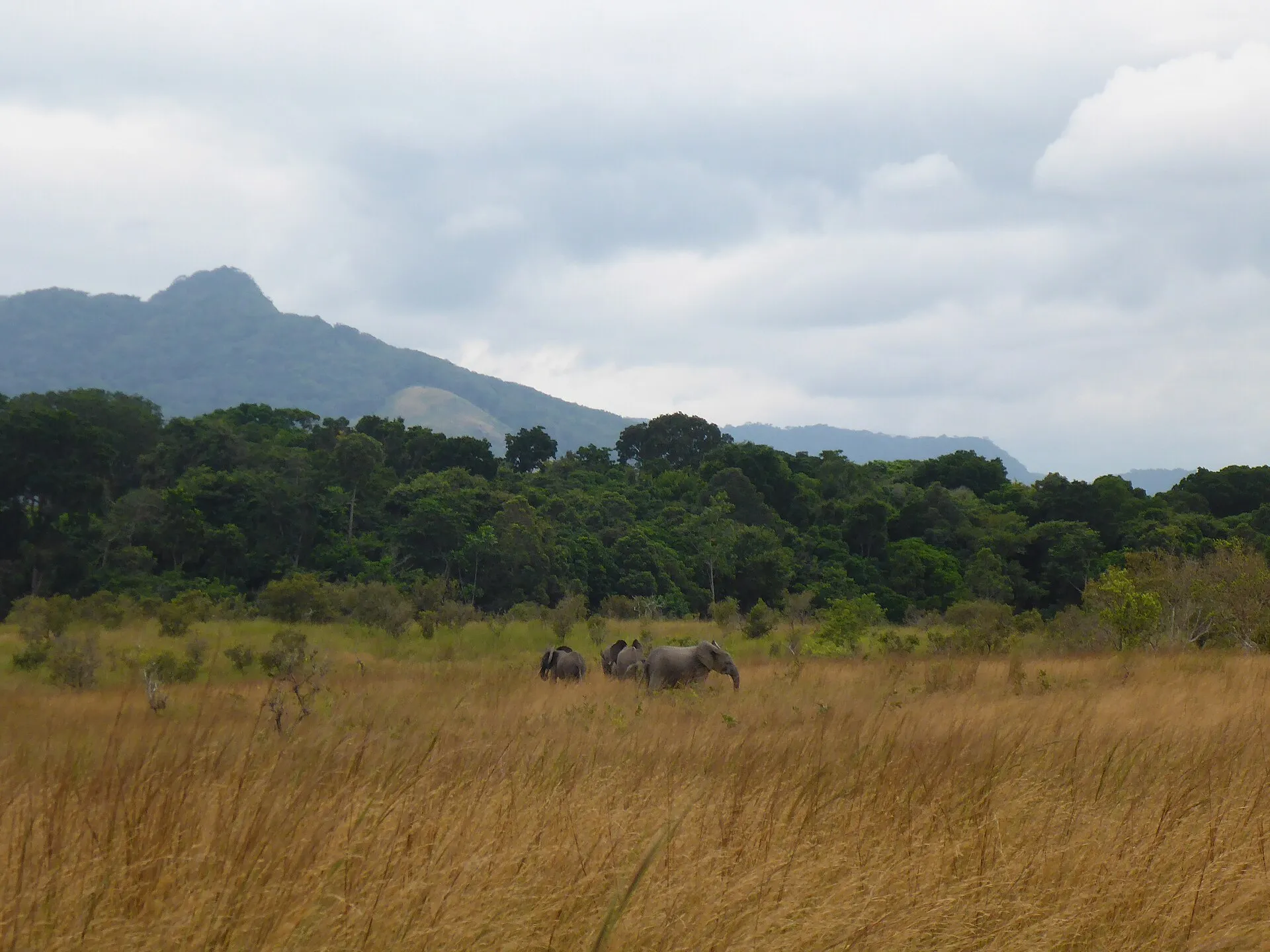
On the inscribed site of Lopé-Okanda, the rock engravings are found at the foot of the hills, in the mosaic of forest and savannah.
The full chapter
Masks by people, initiation societies, dances by province, crafts and cuisine: the full account is on the Tourism & discovery page.